Emergency plumbing
Professional emergency plumbing dispatched directly from our Farquhar Ave shop in Los Alamitos
Learn what we fix

Plumbing Notes · Updated 2026-10-28
Practical plumbing guidance for Los Alamitos, Rossmoor, and West Orange County homeowners regarding garage water heater rules in california. Call (207) 419-2600.
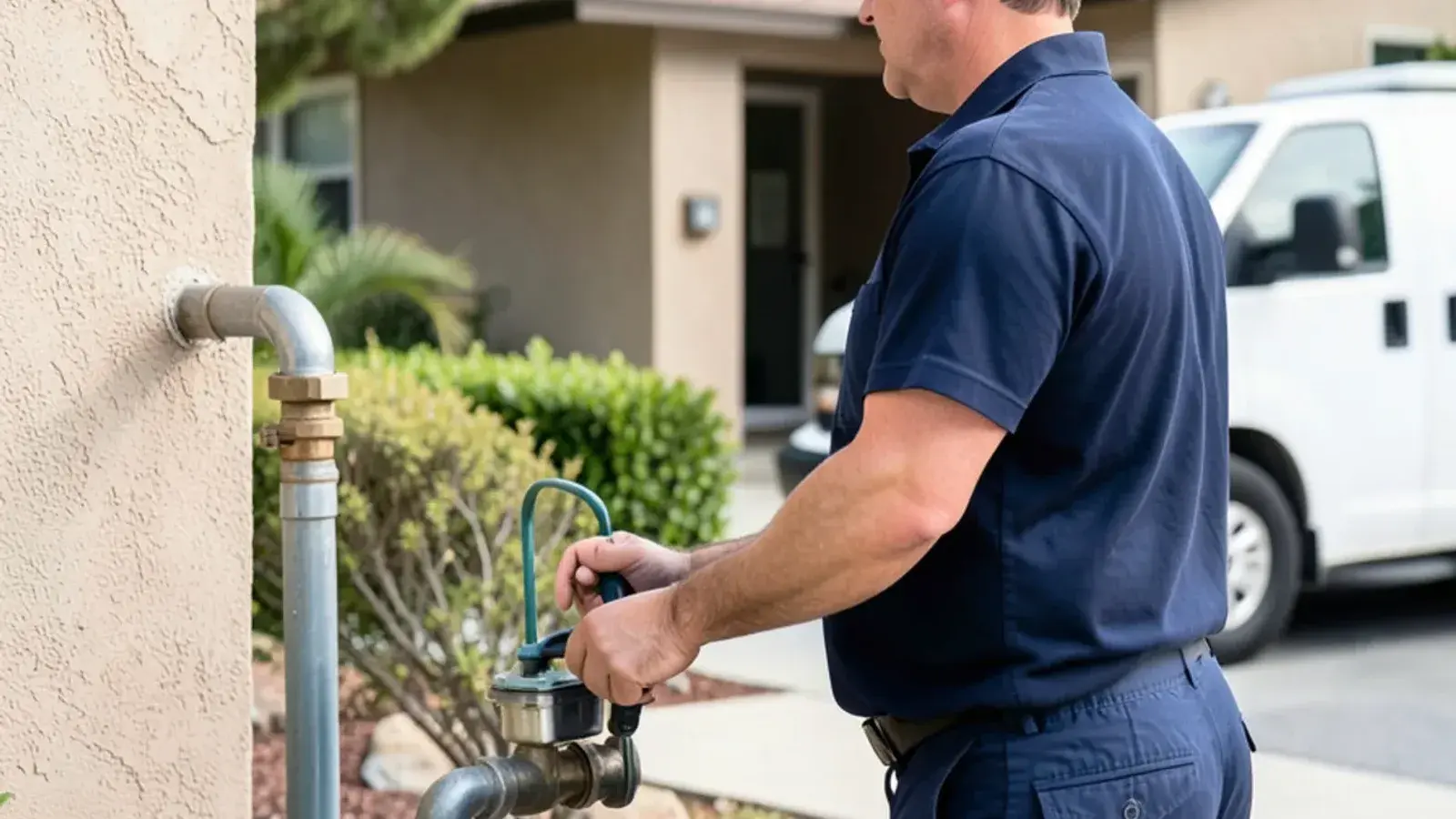
In single-family tract homes throughout Los Alamitos, Rossmoor, Cypress, and Lakewood, attached two-car garages are the standard location for residential water heating equipment. Placing a water heater in the garage keeps mechanical equipment out of living spaces, provides convenient ventilation routes, and isolates potential leaks from finished interior floors.
Because a garage houses motor vehicles, stored fuels, paint solvents, and lawn machinery, water heaters placed in this environment operate under stringent municipal safety regulations. In California, water heater installations are governed by the California Plumbing Code (CPC), California Energy Code (Title 24), and California Health and Safety Code Section 19211.
Whether you are replacing an aging 50-gallon gas tank or preparing your home for sale, understanding these state and municipal code mandates ensures your installation passes municipal building inspection, satisfies insurance requirements, and protects your household during seismic events.
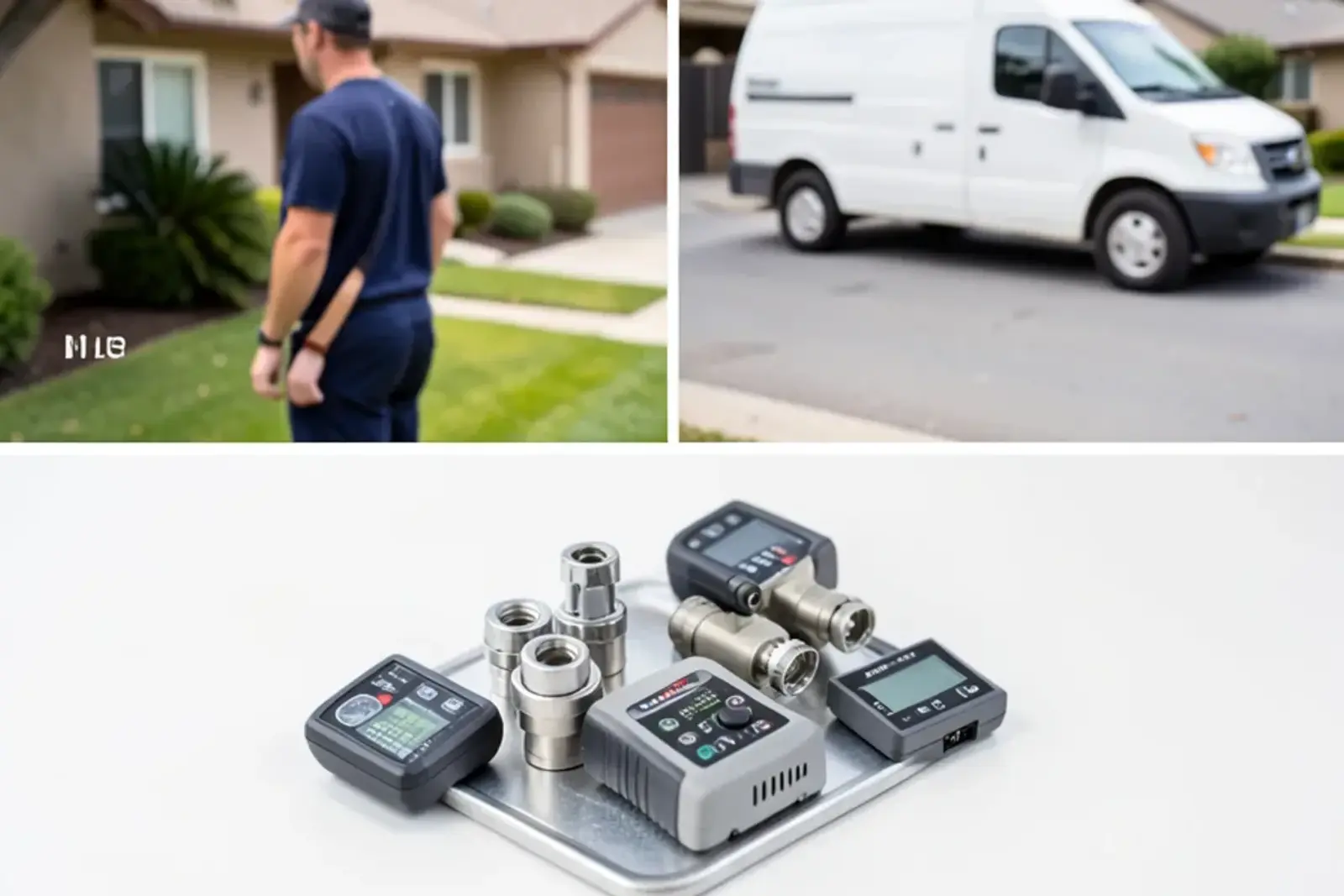
Municipal building inspectors across West Orange County focus on four primary mechanical safety components during a water heater installation inspection:
California is earthquake territory, and an unrestrained 50-gallon water heater weighs over 450 pounds when full of water. During ground shaking, an unstrapped water heater can topple, shearing the gas line, causing an open fuel leak, and severing water supplies that could otherwise serve as emergency drinking water.
Gasoline vapors and automotive fluids are denser than atmospheric air, settling along the concrete garage floor where an open pilot light or burner could ignite them.
Every water heater tank must feature an ASME-rated Temperature and Pressure Relief Valve designed to release water if internal tank pressure exceeds 150 PSI or temperature exceeds 210 degrees Fahrenheit.
Whenever a plumbing system includes an approved backwater valve, check valve, or water pressure reducing valve, it creates a closed hydraulic loop. When incoming cold water is heated from 60 degrees to 125 degrees Fahrenheit, the water expands by over two percent.
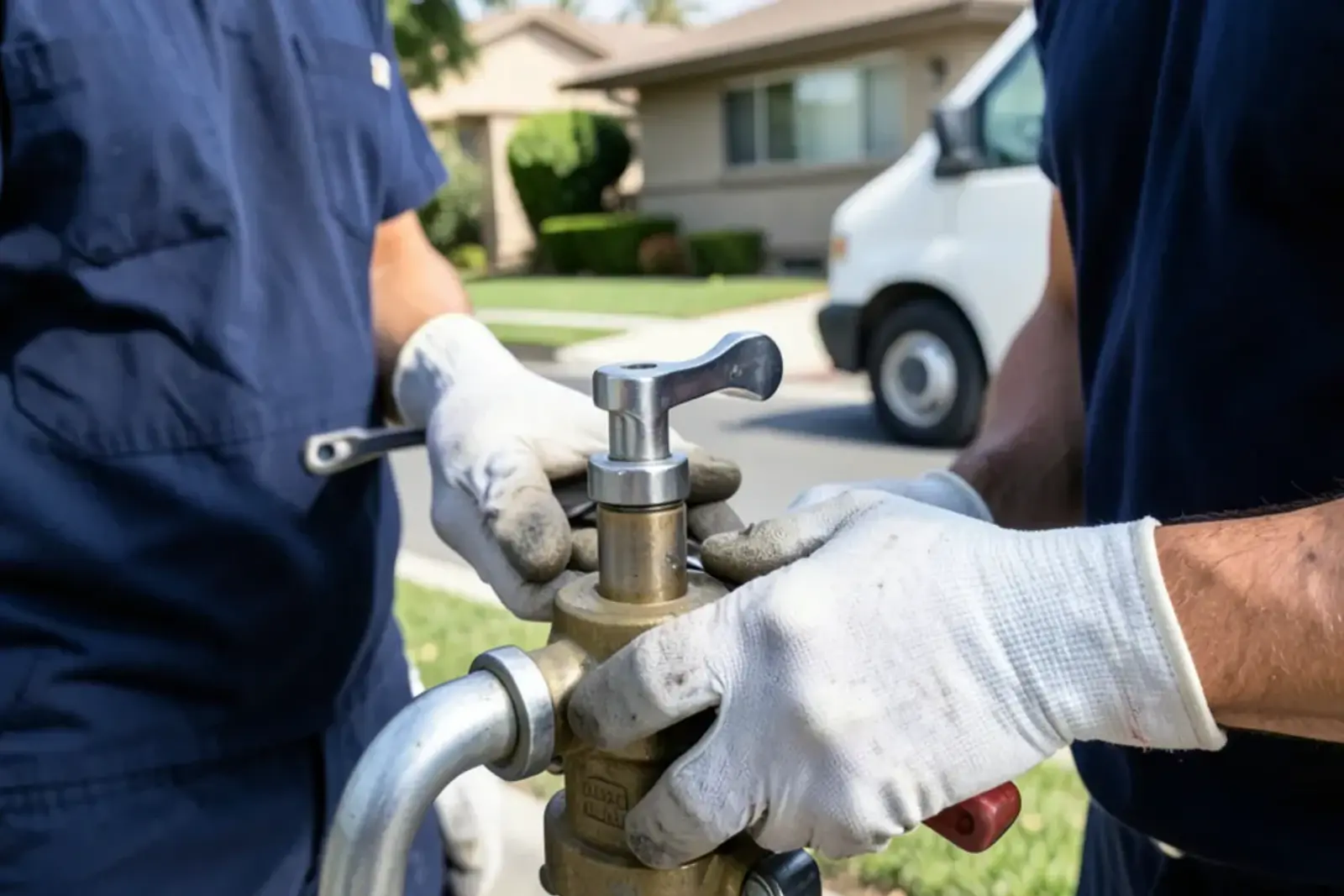
The following reference table outlines common garage water heater installation violations and the corresponding California code-compliant standard:
| Component | Common Non-Compliant Condition | California Code-Compliant Requirement | Code Reference |
|---|---|---|---|
| Seismic bracing | Single thin plumber tape wrapped around tank | Double heavy-gauge steel straps lagged into studs with 1/4" x 3" screws | H&SC Section 19211 |
| Burner elevation | Standard gas heater resting directly on garage floor slab | Burner elevated 18" on metal stand or protected by vehicle bollard | CPC Section 507.13 |
| Relief discharge | T&P line terminating inside garage wall or using PEX outdoors | Rigid copper or galvanized steel discharging 6" to 24" above exterior grade | CPC Section 608.5 |
| Expansion volume | No expansion tank installed on a closed system with PRV | Pre-charged diaphragm expansion tank calibrated to household line pressure | CPC Section 608.3 |
| Combustion venting | Single-wall vent pipe in contact with wood framing | Type B double-wall metal vent maintaining 1-inch clearance to combustibles | Title 24 & CPC 509 |
| Gas supply valve | Old stuck valve without sediment trap | Quarter-turn gas cock with 3" dirt leg sediment trap upstream of appliance | CPC Section 1211.0 |
In addition to seismic and mechanical safety, garage water heater replacements must comply with the California Energy Code (Title 24):
Title 24 mandates that the first five feet of both hot and cold water supply piping connected to a storage water heater must be wrapped in pre-formed foam insulation with a minimum wall thickness of 3/4 inch. Insulating exposed copper pipes prevents standby convective heat loss into unconditioned garage spaces.
Gas water heaters require continuous fresh oxygen for clean combustion and proper draft. A typical 40,000 BTU water heater requires adequate ventilation openings:
Before calling for a municipal building inspection in Los Alamitos, review this practical verification checklist:
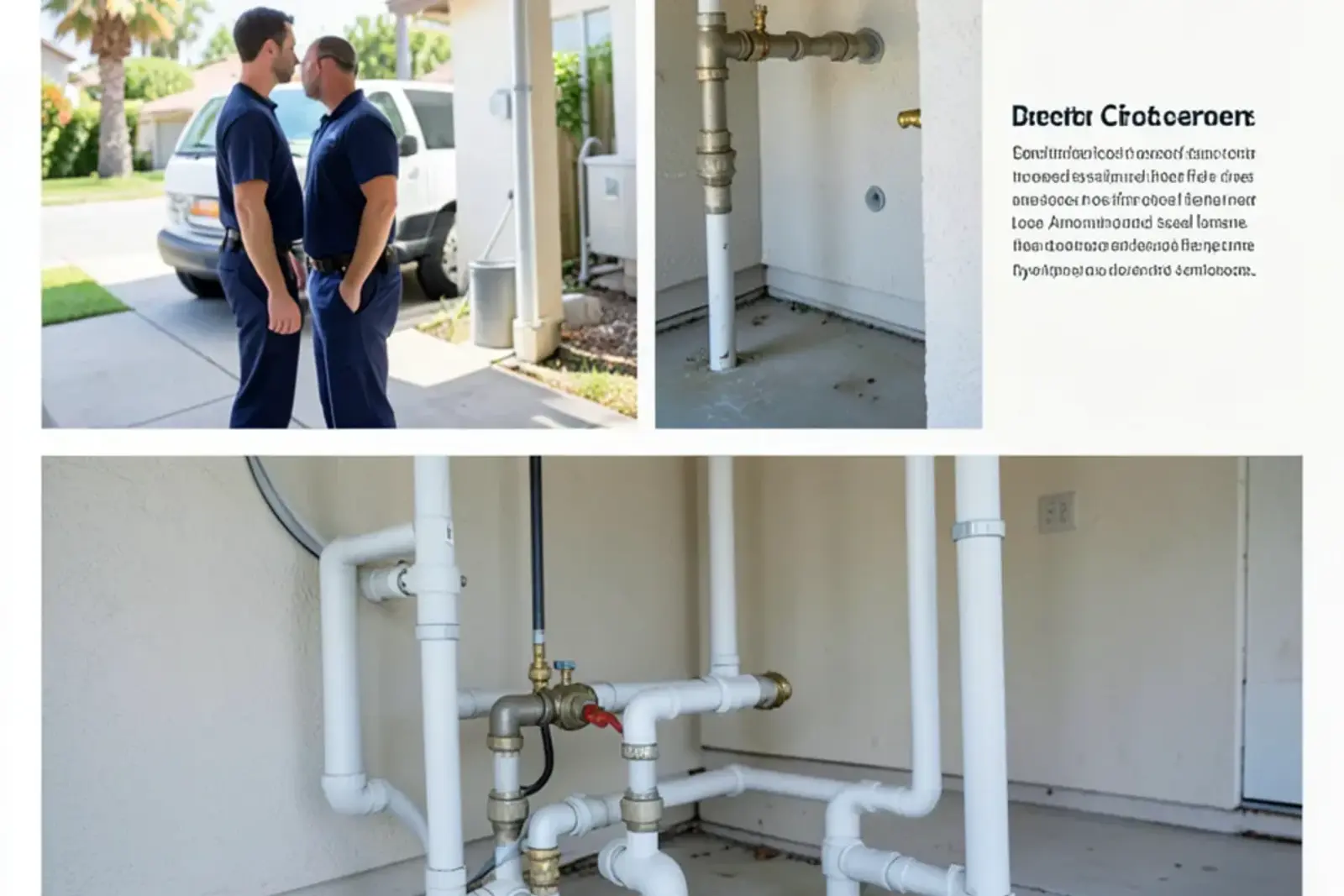
Installing a code-compliant water heater in your garage requires careful attention to state safety mandates and municipal building standards. Operating from our workshop at 3535 Farquhar Avenue in downtown Los Alamitos, our licensed plumbing contractors handle complete residential water heater replacements, seismic retrofits, and tankless conversions across West Orange County.
We manage all city permit applications, perform precision installations, and coordinate municipal inspections to ensure your system meets every California code requirement. Call our Farquhar Avenue team at (207) 419-2600 to schedule service or discuss your water heating project today.
Frequently Asked Questions
Under the California Plumbing Code, gas water heaters installed in residential garages historically required the burner flame to be elevated at least 18 inches above the garage floor to prevent ignition of heavier-than-air gasoline fumes. Modern water heaters equipped with Flammable Vapor Ignition Resistant (FVIR) technology are permitted on the slab floor in some jurisdictions, but local building departments, including the City of Los Alamitos, often continue to require an 18-inch stand or an impact bollard if the unit sits in a vehicle path.
California Health and Safety Code Section 19211 mandates that all water heaters must be secured to resist earthquake motion. The installation requires two heavy-gauge steel straps: one secured within the upper one-third of the tank body and one within the lower one-third (at least 4 inches above the gas control valve). Straps must wrap completely around the tank and lag into solid structural wall framing.
When cold water inside a water heater is warmed, it expands in volume by two to three percent. If your home has a pressure reducing valve or backflow preventer, expanding water cannot push backward into municipal mains. Without a pre-pressurized thermal expansion tank to absorb this hydrostatic surge, water pressure spikes violently, dripping the temperature-pressure relief valve and stressing appliance connections.
The relief valve discharge line must be constructed from hard copper, galvanized steel, or high-temperature CPVC. Flexible plastic tubing and standard PEX are not approved for relief lines that discharge through exterior walls where exposed to direct sunlight. The line must slope downward and terminate with an unthreaded end between 6 and 24 inches above the ground.
Related Services
Professional emergency plumbing dispatched directly from our Farquhar Ave shop in Los Alamitos
Professional water heater installation dispatched directly from our Farquhar Ave shop in Los Alamitos
Professional water heater repair dispatched directly from our Farquhar Ave shop in Los Alamitos
Professional tankless water heater installation dispatched directly from our Farquhar Ave shop in Los Alamitos
Communities Mentioned
Orange County
Master-planned 1956 community founded by Ross W. Cortese featuring 3,400 single-family slab homes and signature red brick perimeter walls
Orange County
Coastal city featuring historic Old Town beachfront cottages, The Hill bungalows, and the 1962 Leisure World active-adult cooperative