Emergency plumbing
Professional emergency plumbing dispatched directly from our Farquhar Ave shop in Los Alamitos
Learn what we fix

Plumbing Notes · Updated 2026-10-28
Practical plumbing guidance for Los Alamitos, Rossmoor, and West Orange County homeowners regarding postwar plumbing in los alamitos & rossmoor. Call (207) 419-2600.
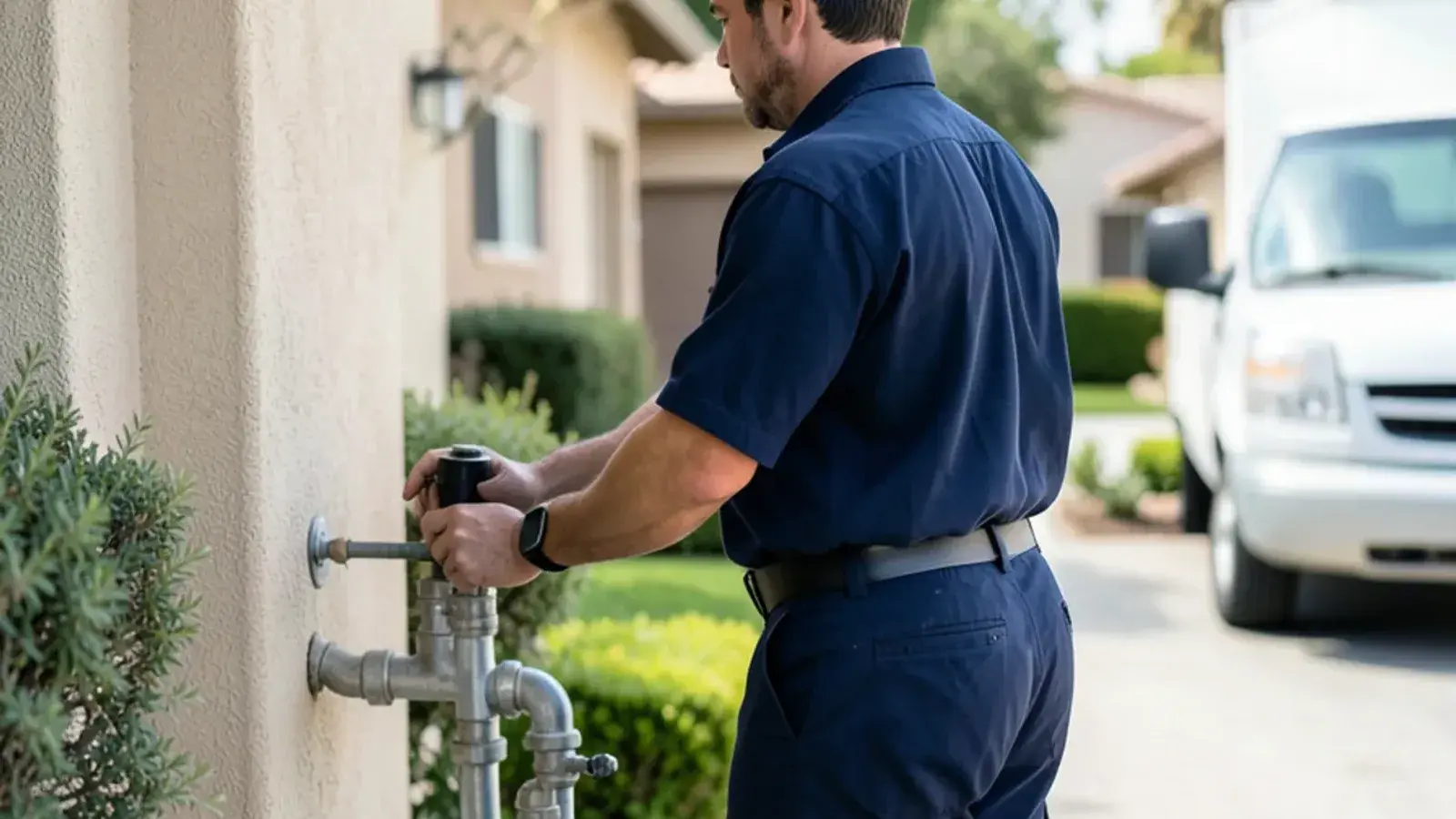
Between 1955 and 1965, the agricultural sugar beet fields and dairy pastures of Los Alamitos and neighboring Rossmoor transformed into iconic Southern California suburban neighborhoods. Developers such as Ross W. Cortese built thousands of mid-century single-family homes across neighborhoods like Dutch Haven, Carrier Row, Suburbia, and the 3,400-home Rossmoor planned community. These postwar residences were marvels of their era, featuring open floor plans, attached two-car garages, and built-in heating systems.
Behind the lath-and-plaster walls and beneath the monolithic concrete foundations, however, lies an aging mechanical infrastructure that has now passed its sixty-year design lifespan. Understanding the specific metallurgy, drainage materials, and foundation construction methods used in these postwar communities is essential for preventing catastrophic water leaks, sewer backups, and structural damage.
When plumbing issues emerge in Rossmoor or Los Alamitos, they rarely behave like problems in newer construction. The combination of concrete slab-on-grade foundations, aggressive local groundwater chemistry, and mature urban street trees creates distinct failure patterns that require specialized diagnostic approaches and modern rehabilitation techniques.
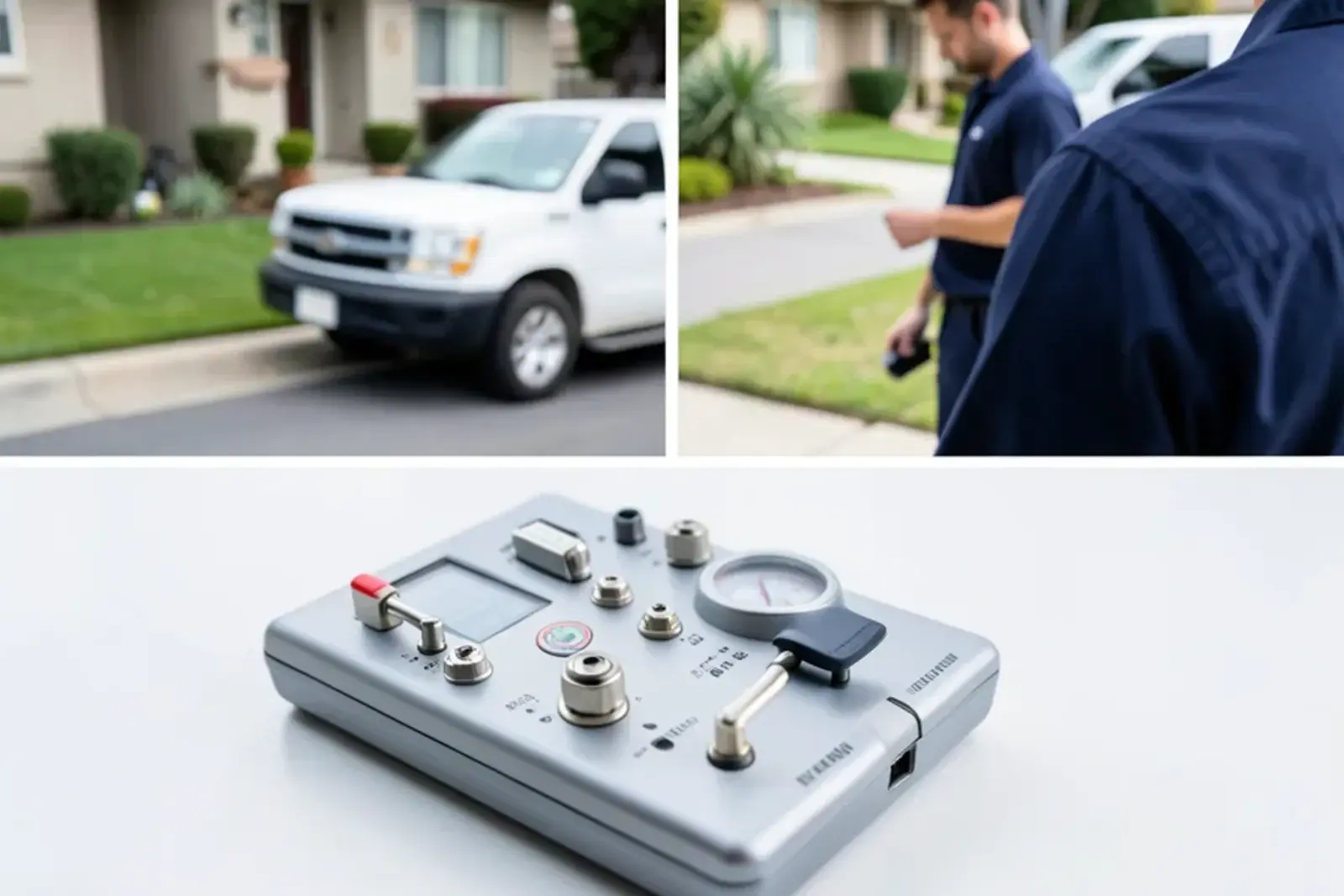
Postwar residential construction in West Orange County relied on four primary plumbing systems, each with its own lifespan and engineering vulnerabilities:
Single-story tract homes in Los Alamitos were built on monolithic concrete slab-on-grade foundations. Rather than routing water lines overhead, plumbers rolled out continuous coils of annealed soft Type L and Type M copper tubing directly across the dirt and sand subgrade before pouring concrete. While soft copper eliminated soldered joints beneath the slab, sixty years of thermal expansion have taken their toll. Every time a hot water faucet opens, the copper line expands and slides against rough gravel aggregates. Over decades, this microscopic friction thins the outer pipe wall, culminating in pressurized pinhole perforations known as slab leaks.
Vertical supply risers feeding bathroom vanities, kitchen sinks, and hose bibbs were frequently constructed from threaded galvanized iron pipe. While mechanically strong, galvanized pipe reacts internally with municipal drinking water. Mineral minerals and oxygen trigger internal rusting, forming thick rust nodules called tuberculation. Over time, the internal diameter of a half-inch galvanized pipe narrows to the width of a pencil lead, choking household water pressure and releasing reddish-brown flakes when faucets are turned on.
For interior sanitary drainage, builders installed hub-and-spigot cast iron soil stacks and horizontal waste branches joined with molten lead and oakum. Beneath kitchen sinks and laundry rooms, cast iron pipes endure decades of hot water, alkaline laundry detergents, and acidic food residues. The continuous flow of water along the pipe bottom causes horizontal channel erosion, steadily wearing away the pipe invert until the bottom channel breaks open into the soil below the foundation.
From the foundation edge out to the street sewer main, postwar builders laid vitrified clay pipe (VCP) in three-to-four-foot bells. Clay pipe is naturally immune to sewer gas corrosion, but its joints were sealed with cement mortar or tar compound. As soil shifts across the Coyote Creek alluvial basin and root systems from mature camphor, magnolia, and ficus trees seek out moisture vapor, these brittle joints separate. Feeder roots penetrate the joints, expanding into dense root balls that catch toilet paper and kitchen solids, resulting in repeated main sewer backups.
The following matrix compares the original materials installed in 1950s Los Alamitos and Rossmoor tract homes against modern, code-compliant replacement technologies:
| Original System | Design Lifespan | Primary Failure Mode | Modern Engineering Solution | Expected Lifespan |
|---|---|---|---|---|
| Under-slab soft copper | 30 to 45 years | Pinhole leaks from gravel friction and soil chemistry | Overhead Uponor PEX-a repiping through attic cavities | 50+ years |
| Galvanized steel supply lines | 40 to 50 years | Internal rust tuberculation and severe volume loss | Cross-linked polyethylene (PEX-a) with brass quarter-turn stops | 50+ years |
| Cast iron horizontal drains | 50 to 60 years | Invert bottom channeling and rust flaking | Schedule 40 ABS drainage piping or epoxy CIPP lining | 50+ years |
| Vitrified clay sewer lateral | 50 to 60 years | Mortared joint separation and severe root intrusion | Trenchless CIPP cured-in-place pipe lining or HDPE bursting | 75+ years |
| Multi-turn brass gate valves | 15 to 25 years | Stem packing leaks and internal gate seizure | Full-port forged brass quarter-turn ball valves | 30+ years |
Because most postwar plumbing is concealed inside concrete or behind walls, early failure indicators are often subtle. Homeowners should monitor their property for these specific symptoms:
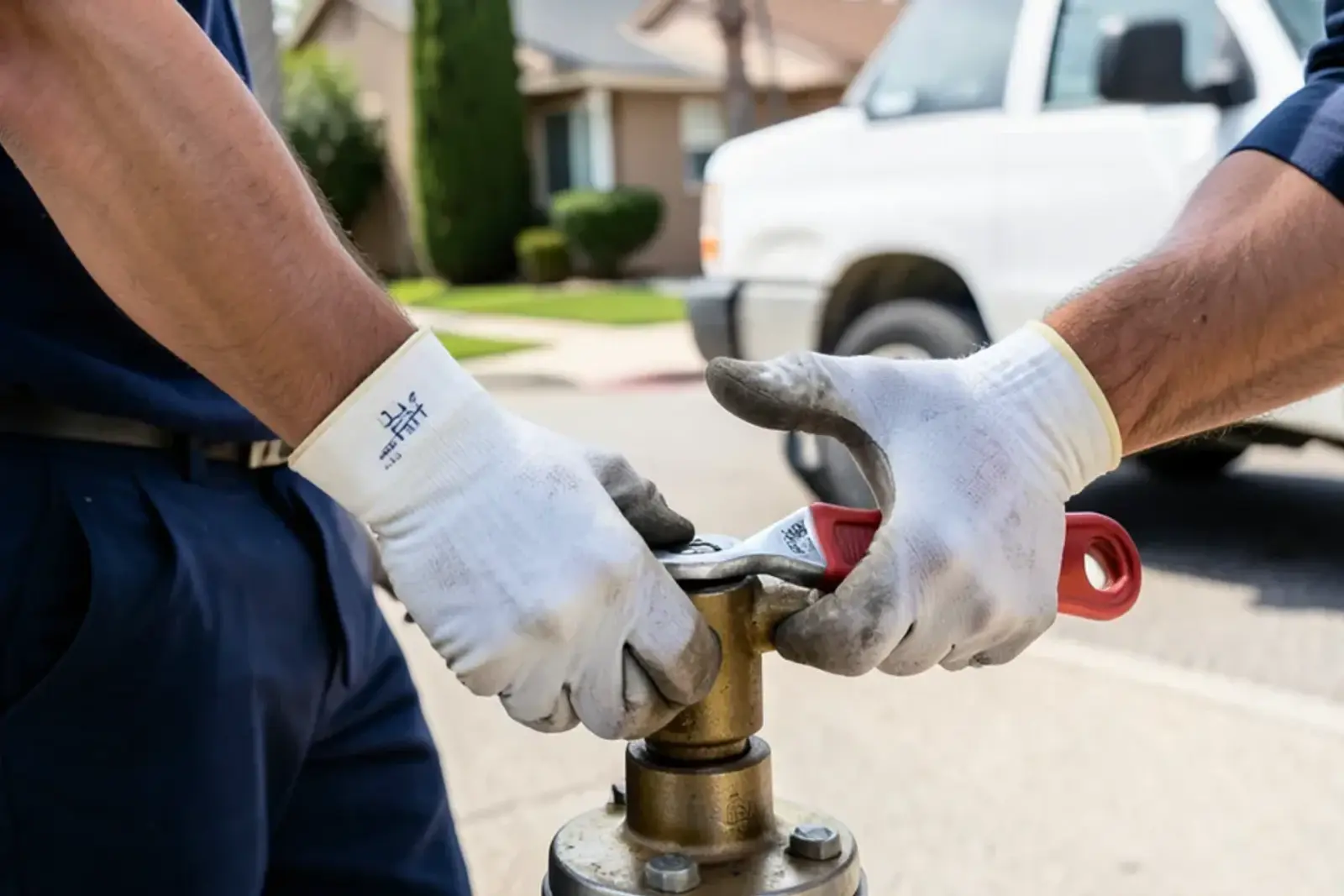
When faced with an under-slab copper pinhole leak in a Los Alamitos or Rossmoor home, homeowners historically faced a disruptive choice: jackhammer through finished hardwood or tile floors to spot-repair a single pipe section, or reroute the plumbing. Today, professional plumbing contractors strongly recommend overhead PEX-a repiping as the gold standard for long-term reliability.
Jackhammering through a structural slab creates concrete dust, disrupts interior living areas, and weakens the slab. More critically, an under-slab spot repair only fixes the single perforation that ruptured today; it does nothing to prevent the remaining sixty-year-old copper tubing from developing another pinhole leak months or weeks later.
An overhead repipe completely abandons the failing under-slab copper lines. Our plumbing contractors route flexible Uponor PEX-a tubing through attic spaces and drop down through existing interior wall cavities to feed each fixture. PEX-a expands and contracts during temperature fluctuations without stressing fittings, resists mineral scaling from Golden State Water, and operates quietly. The entire installation is completed with minimal wall openings and fully insulated to comply with California Title 24 energy standards.
Just as overhead repiping solved the challenge of under-slab water lines, trenchless cured-in-place pipe (CIPP) lining has revolutionized sewer lateral repair for Rossmoor and Los Alamitos properties. In established neighborhoods lined with mature shade trees, manicured lawns, and concrete driveways, traditional open-trench sewer excavation can cause extensive yard and hardscape damage.
Trenchless CIPP lining restores damaged vitrified clay laterals from an outside ground cleanout. The procedure involves several coordinated steps:
Before undertaking remodeling projects or major plumbing repairs in a postwar home, review this systematic verification checklist:
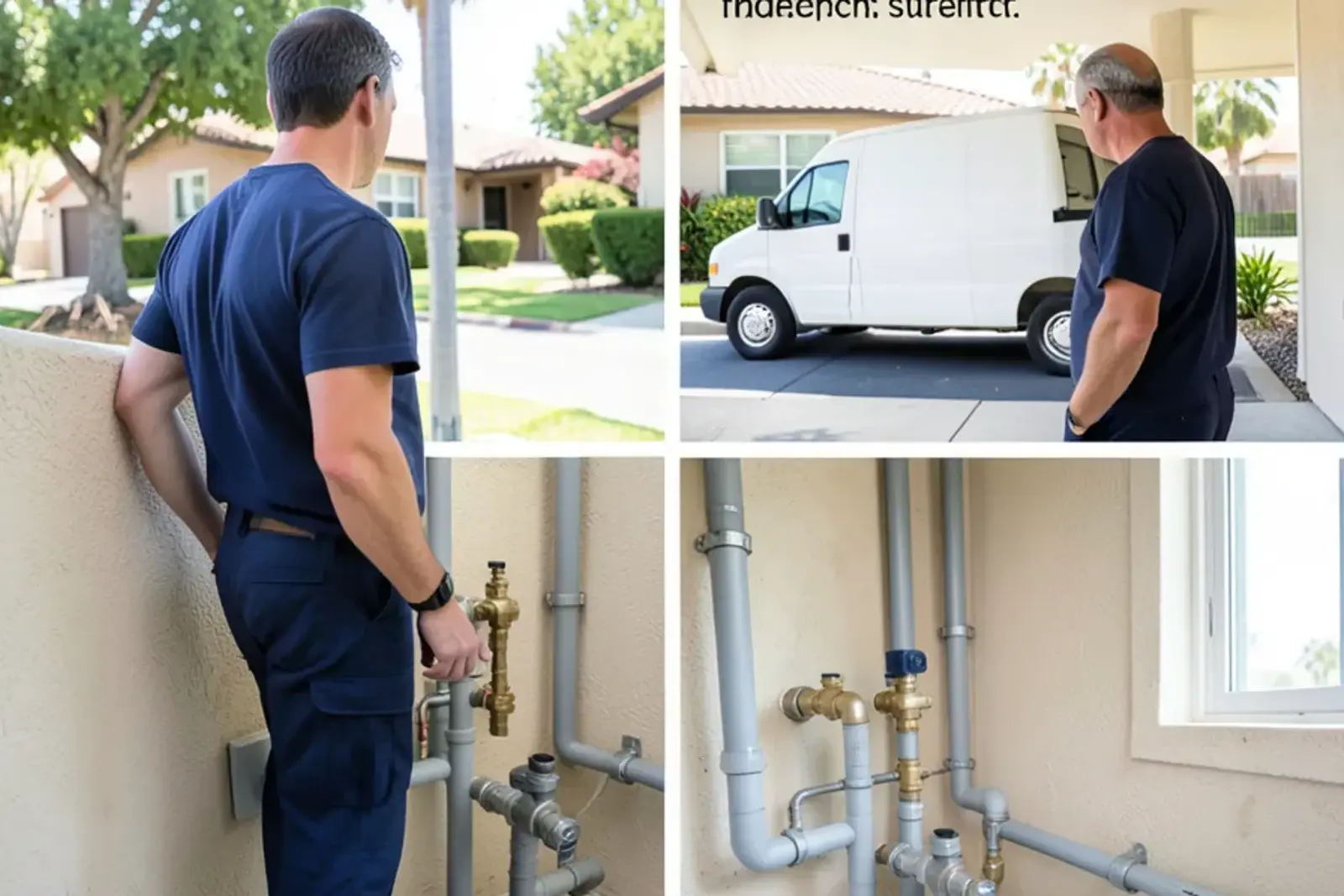
Maintaining the integrity and value of a mid-century home in Los Alamitos or Rossmoor requires partnering with plumbers who understand the unique structural characteristics of postwar suburban construction. Dispatched from our central workshop at 3535 Farquhar Avenue in downtown Los Alamitos, our experienced technicians specialize in non-invasive electronic slab leak detection, overhead PEX-a repiping, and trenchless sewer restoration.
We provide thorough physical evaluations, clear technical explanations, and fixed upfront written pricing before any work begins. To discuss your home plumbing system or schedule an inspection, call our Farquhar Avenue team at (207) 419-2600 today.
Frequently Asked Questions
Homes built in Rossmoor and Los Alamitos during the 1950s and 1960s typically feature soft copper water lines buried beneath monolithic concrete slabs, galvanized steel branch supply lines inside partition walls, cast iron soil stacks and horizontal drain lines, and vitrified clay sewer laterals connecting to municipal mains.
Postwar builders laid soft copper supply lines in sand beds directly below concrete slabs. Over six decades of daily hot-water expansion and contraction, the copper exterior rubs against aggregate gravel. Combined with local soil moisture and mineral chemistry, this mechanical friction causes microscopic pinhole perforations.
If an under-slab copper line has suffered its first isolated leak and the pipe wall remains thick, a brazed spot repair can be practical. However, in postwar homes over sixty years old, multiple leaks indicate systematic wall thinning. An overhead Uponor PEX-a repipe routed through the attic eliminates the risk of future slab leaks without breaking finished flooring.
Original vitrified clay sewer laterals were joined in short three-to-four-foot sections sealed with mortar or cold-tar gaskets. Over time, ground settlement around Coyote Creek and root growth from mature camphor, eucalyptus, and ficus trees crack these brittle joints, allowing roots to enter and choke the drain line.
Related Services
Professional emergency plumbing dispatched directly from our Farquhar Ave shop in Los Alamitos
Professional leak detection dispatched directly from our Farquhar Ave shop in Los Alamitos
Professional repiping dispatched directly from our Farquhar Ave shop in Los Alamitos
Professional slab leak repair dispatched directly from our Farquhar Ave shop in Los Alamitos
Professional sewer line repair dispatched directly from our Farquhar Ave shop in Los Alamitos
Communities Mentioned
Orange County
Master-planned 1956 community founded by Ross W. Cortese featuring 3,400 single-family slab homes and signature red brick perimeter walls
Orange County
Coastal city featuring historic Old Town beachfront cottages, The Hill bungalows, and the 1962 Leisure World active-adult cooperative